
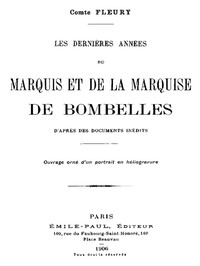
Les Dernières Années du Marquis et de la Marquise de Bombelles by Fleury
Let's set the stage: France, late 1700s. The Marquis de Bombelles is a diplomat, moving in the highest circles of European royalty. His wife, the Marquise, is his intellectual partner and the heart of their home. They have it all—status, connections, a seemingly secure future. Then, the storm breaks. The French Revolution begins, and their privileged world starts to crumble brick by brick.
The Story
Fleury's book isn't a grand narrative of battles and politics. Instead, he uses the Bombelles' own letters and documents to tell a much more personal story. We follow them as the Revolution's shockwaves hit. They're forced into exile, becoming refugees dependent on the kindness (or politics) of other European courts. The threat of the guillotine is a constant shadow. The story becomes a tense game of survival—moving from place to place, managing dwindling funds, protecting their children, and watching friends and their entire social class be destroyed. It's a close-up look at history from the inside of a drawing room and a fleeing carriage.
Why You Should Read It
This book grabbed me because it makes history human. The Marquis and Marquise aren't just names in a textbook; they're a real couple facing a nightmare. You feel their fear, their exhaustion, their stubborn hope. Their relationship is tested in every way imaginable. It's also fascinating to see the Revolution from the 'other side'—not from the streets of Paris, but from the terrified perspective of those it targeted. Fleury doesn't ask you to agree with their politics, but he makes you understand their humanity. It's a powerful reminder that history is made of individual stories, not just ideas.
Final Verdict
This is a perfect pick for anyone who loves character-driven historical stories. If you enjoyed the personal drama in books like Marie Antoinette: The Journey or the tense atmosphere of A Tale of Two Cities, you'll find a lot to love here. It's for readers who want to go beyond the dates and decrees and feel the emotional weight of a world ending. A word of caution: it is a translation of older historical writing, so the prose can feel formal at times. But push through—the raw, personal story at its heart is absolutely worth it. You'll close the book thinking about resilience, love in crisis, and the fragile nature of any society.
You are viewing a work that belongs to the global public domain. It is now common property for all to enjoy.
Thomas Scott
1 year agoEnjoyed every page.


David Hill
1 year agoGood quality content.