
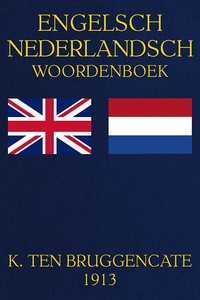
Engelsch woordenboek. Eerste deel: Engelsch-Nederlandsch by K. ten Bruggencate
Let's be clear: Engelsch woordenboek. Eerste deel: Engelsch-Nederlandsch is not a novel. You won't find heroes, villains, or a three-act structure. The 'story' is the creation of the dictionary itself. Published in the late 1800s, this first volume (English-Dutch) represents the initial, massive step in Karel ten Bruggencate's lifelong work. It's a systematic attempt to map English vocabulary for Dutch speakers of his time, providing definitions, usage examples, and phonetic guides.
The Story
The plot is the process. Ten Bruggencate, a dedicated linguist, spent years compiling, defining, and translating. Each page is a collection of tiny decisions: which words to include (reflecting the technology, culture, and concerns of the Victorian era), how to define them for a Dutch audience, and how to capture pronunciation. The narrative is in the preface and the entries themselves—a record of one man's attempt to build a reliable tool for cross-cultural understanding in an era before instant digital translation.
Why You Should Read It
You don't 'read' it like a story. You explore it. I found myself randomly opening pages and getting completely sidetracked. Looking up a word like 'telegraph' or 'locomotive' gives you a sense of what was modern. Seeing how idioms are translated reveals cultural thinking. The physical and mental effort this represents is humbling. In our age of Google Translate, this book is a tangible reminder of the deep scholarship and painstaking labor that once underpinned language learning. It’s a quiet monument to precision and patience.
Final Verdict
This is a niche but wonderful find for specific readers. It's perfect for language nerds, historians of the Victorian era, or anyone with Dutch heritage curious about linguistic history. It's also great for writers seeking period-appropriate terminology. It's not for someone looking for a gripping narrative. But if you've ever been fascinated by the weight and smell of an old book, and the hidden stories in reference works, dipping into Ten Bruggencate's dictionary is a unique and surprisingly rewarding experience. Think of it as historical detective work, one word at a time.
This text is dedicated to the public domain. It is now common property for all to enjoy.
Jennifer Hernandez
2 years agoHaving read this twice, the plot twists are genuinely surprising. Truly inspiring.
Charles Hill
4 months agoComprehensive and well-researched.
Brian Garcia
2 months agoI came across this while browsing and the emotional weight of the story is balanced perfectly. Truly inspiring.
Mary White
1 year agoRecommended.
James Gonzalez
7 months agoRecommended.