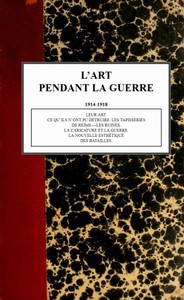
L'art pendant la guerre 1914-1918 by Robert de La Sizeranne
When we picture World War I, we see soldiers in trenches, barbed wire, and smoke. Robert de La Sizeranne asks us to look again. What was happening on the easels, in the sketchbooks, and in the minds of artists while the world was at war? This book explores that exact space.
The Story
There isn't a traditional plot with characters, but there is a clear journey. The book acts as a guide through the years 1914 to 1918, examining how the seismic event of the war shook the very foundations of European art. It looks at the immediate reaction—the patriotic posters, the somber portraits of leaders, and the initial wave of propaganda. Then, it moves deeper. How did the experience of the front lines change the soldiers who were also artists? What did civilians, living in fear and grief, choose to paint or sculpt? La Sizeranne pulls together examples from across the artistic landscape, showing how movements shifted and new, often raw, forms of expression emerged from the chaos. The 'story' is the evolution of art itself under extreme pressure.
Why You Should Read It
This book surprised me. I expected a catalog of war paintings, but it's so much more. It frames art as a vital human response, not a luxury. Reading it, you feel the tension between the duty to document horror and the need to escape it through beauty. Some artists doubled down on classic, reassuring forms. Others broke everything apart, their style fragmenting just like the world around them. La Sizeranne doesn't just tell you this; he shows you by connecting the art to the mood of the time. It makes the war feel closer and more complex. You realize that for many, creating was as essential as eating—a way to process the unprocessable.
Final Verdict
Perfect for history buffs who want a fresh angle on WWI, or for art lovers curious about how crisis fuels creativity. It's also great for anyone who enjoys stories about human resilience. The writing is clear and the chapters are short, making it an engaging read rather than a heavy academic slog. You'll finish it looking at both art and history with new eyes, reminded that even in the darkest times, people never stop trying to make meaning.
This is a copyright-free edition. Share knowledge freely with the world.
Jackson Brown
1 week agoTo be perfectly clear, the clarity of the writing makes this accessible. I couldn't put it down.
Jennifer Jones
10 months agoI was skeptical at first, but the narrative structure is incredibly compelling. Don't hesitate to start reading.
Nancy Lewis
2 years agoText is crisp, making it easy to focus.
Emma Smith
1 year agoAfter hearing about this author multiple times, the pacing is just right, keeping you engaged. This story will stay with me.
Edward Perez
1 year agoRead this on my tablet, looks great.