
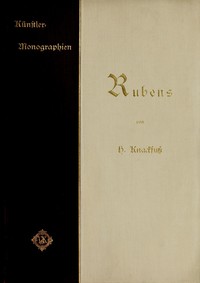
Rubens by H. Knackfuss
Let's clear something up first. This isn't a new book—it was written over a century ago by Hermann Knackfuss. But don't let that scare you off. What Knackfuss gives us is a remarkably clear-eyed portrait of Peter Paul Rubens, the 17th-century Flemish painter who was so much more than just an artist.
The Story
Knackfuss structures this like a guided tour through a life, not just a gallery. He starts with Rubens the student, tracing his years in Italy where he soaked up everything from Titian's color to ancient sculptures. The real plot kicks in when Rubens returns home. The book shows him building his famous Antwerp studio, a creative factory that produced masterpieces at an unbelievable pace. But here's the twist: Knackfuss spends just as much time on Rubens the diplomat. We follow him on secret missions across Europe, negotiating truces and carrying sensitive letters for royalty. The 'story' is how these two lives—the artist and the statesman—constantly fed into each other. The book argues that his understanding of politics and human nature is what made his paintings of war, peace, and mythology feel so powerfully real.
Why You Should Read It
I loved this because it shattered my idea of the lonely, tormented artist. Rubens was organized, successful, and frankly, had his life together. Knackfuss presents him as a complete person: a family man, a scholar, a businessman, and a genius. You get a real sense of his energy and his intellect. The writing, while old-fashioned, has a directness that cuts through the usual art jargon. Knackfuss points to specific paintings and says, 'Look here, see how his travels influenced this?' It makes you see the work in a new light. You stop just seeing naked figures and start seeing coded political messages, personal grief, and hard-won optimism.
Final Verdict
This is a perfect starter kit for anyone curious about Rubens or Old Masters in general. It's short, focused, and packed with insight. It's also great for readers who enjoy biographies of multifaceted people, like da Vinci or Churchill. If you're a serious art historian, you'll know this is an older perspective, but its clarity is still valuable. For the rest of us, it's a brilliant, compact introduction to a man whose life was as grand and complex as his paintings. Keep your phone handy to look up the paintings he mentions—it turns the read into a thrilling visual scavenger hunt.
This masterpiece is free from copyright limitations. Feel free to use it for personal or commercial purposes.
David Harris
1 month agoRecommended.
Lucas Miller
8 months agoSimply put, the narrative structure is incredibly compelling. I will read more from this author.



William Anderson
1 year agoThanks for the recommendation.