
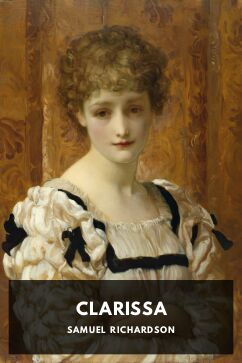
Clarissa - Samuel Richardson
Let's talk about the elephant in the room first: this book is massive. Samuel Richardson's Clarissa is an epistolary novel, meaning the whole story unfolds through letters written by the characters. It follows Clarissa Harlowe, a young woman of intelligence and strong principles, whose wealthy family is climbing the social ladder. They decide the best way to secure their fortune is to force Clarissa into a marriage with a repulsive but rich man named Solmes.
The Story
When Clarissa refuses, her family subjects her to cruel pressure and imprisonment within her own home. Enter Robert Lovelace, a dazzlingly handsome and witty aristocrat with a terrible reputation. He presents himself as her rescuer, helping her escape her family's tyranny. But is he a knight in shining armor or a wolf in gentleman's clothing? The novel becomes a tense, drawn-out battle of wills. Lovelace, obsessed with testing Clarissa's famed virtue, orchestrates an elaborate scheme that leads to her ultimate violation. The rest of the story deals with the devastating aftermath, Clarissa's incredible spiritual resilience, and her quest for justice and peace on her own terms.
Why You Should Read It
Don't let the 1740s publication date fool you. This book feels shockingly modern in its exploration of power, consent, and gaslighting. Richardson gets deep inside the heads of his two main characters. You'll find yourself arguing with Clarissa's choices one minute and weeping for her the next. You'll be charmed by Lovelace's letters and then horrified by his actions. It's a masterclass in complex characterisation. Reading their direct, unfiltered thoughts creates an intimacy and tension that few third-person narratives can match. You're not just watching a tragedy; you're experiencing the slow-motion car crash from the passenger seat.
Final Verdict
This isn't a casual beach read. Clarissa is perfect for patient readers who love deep psychological drama, complex moral questions, and character studies that stay with you for years. If you enjoyed the tense mind games in Gone Girl or the societal pressures in Pride and Prejudice (but way darker), you'll find its ancestor here. Think of it as the ultimate deep dive into how society, family, and one terrible man can try to break a person's spirit—and what happens when that person refuses to break.
This historical work is free of copyright protections. You are welcome to share this with anyone.
John Anderson
5 months agoUsed this for my thesis, incredibly useful.
Michael Martin
5 months agoVery interesting perspective.
Jennifer King
1 year agoI started reading out of curiosity and the clarity of the writing makes this accessible. Exceeded all my expectations.
Thomas Lee
1 year agoText is crisp, making it easy to focus.







Mark Torres
1 month agoGreat read!