
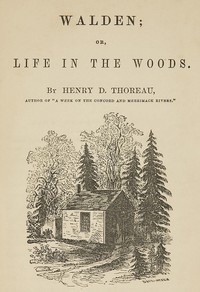
Walden, and On The Duty Of Civil Disobedience by Henry David Thoreau
Let’s clear something up first: Walden is not a novel. There’s no traditional plot with a villain and a climax. Think of it as a two-year-long blog post from 1845. The 'story' is simple: Henry David Thoreau, frustrated with the noise and distraction of town life, builds a one-room cabin on the shore of Walden Pond. For two years, he lives there alone, growing his own food, observing nature, and writing down his thoughts.
The Story
The book chronicles his daily life through the seasons. He describes the ice melting on the pond, the ants waging war on his doorstep, and the sound of a distant train reminding him of the world he left behind. It’s a journal of extreme mindfulness. The second part of the book, 'On the Duty of Civil Disobedience,' is a separate essay. Here, the 'story' is an argument. Thoreau explains why he refused to pay a poll tax (which supported slavery and the Mexican-American War) and spent a night in jail. He makes a powerful case that our conscience must come before the law when the law is wrong.
Why You Should Read It
You should read this not to agree with everything Thoreau says (he can be pretty judgmental!), but to have a conversation with him. His core questions are still urgent. Are we too busy earning a living to actually live? Do we own our stuff, or does it own us? Reading Walden feels like a mental detox. It forces you to slow down and question the default settings of modern life. The 'Civil Disobedience' essay is pure, fiery inspiration. It’s the philosophical blueprint behind Gandhi’s protests and Martin Luther King Jr.’s marches. It reminds you that quiet reflection in the woods and bold action in the world can come from the same place: a commitment to living by your own principles.
Final Verdict
This book is perfect for anyone feeling overwhelmed by the speed of life, for nature lovers, and for people interested in the roots of protest and social change. It’s also great for anyone who enjoys a strong, unique voice—Thoreau is witty, sarcastic, and deeply earnest, sometimes all on the same page. Fair warning: his writing can be dense in spots. Don't try to speed-read it. Sip it slowly, like a strong cup of coffee. You might not want to live in a cabin after reading it, but you’ll almost certainly look at your own life a little differently.
This masterpiece is free from copyright limitations. You are welcome to share this with anyone.
Carol Scott
2 months agoFrom the very first page, it manages to explain difficult concepts in plain English. I learned so much from this.










Liam Flores
11 months agoHaving read this twice, the atmosphere created is totally immersive. One of the best books I've read this year.