
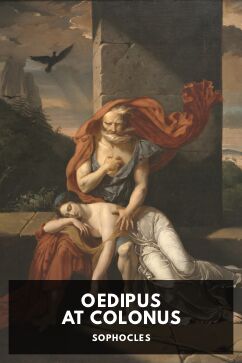
Oedipus at Colonus - Sophocles
Sophocles wrote this play at the very end of his long life, and you can feel it. It's less about the frantic, shocking actions of a younger man (like in Oedipus Rex) and more about reckoning with a lifetime of suffering. It's the middle chapter of a trilogy, but it works perfectly on its own as a powerful standalone story about an ending.
The Story
We meet Oedipus as an old, blind wanderer, led by his faithful daughter Antigone. They stumble into the sacred grove at Colonus, a suburb of Athens. At first, the locals are horrified—this cursed man is defiling a holy place! But Theseus, the wise king of Athens, offers him sanctuary. This act of mercy kicks off the main conflict. Oedipus's other daughter, Ismene, arrives with news: a prophecy says the city that possesses Oedipus's resting place will prosper. Now, his former city of Thebes and his two power-hungry sons want to capture him and use his body as a political weapon. The play becomes a tense waiting game at the grove. Will he be taken by force? Can he trust Theseus's protection? In the middle of this pressure, Oedipus isn't passive. He rails against his sons, defends his own past actions, and makes a deliberate choice about where and how his story will end.
Why You Should Read It
This play floored me because it completely reframes Oedipus. He's not just the guy from the infamous myth. Here, he's furious, eloquent, and heartbreakingly human. His relationship with Antigone is one of the purest portraits of love and duty in all of Greek tragedy. The core question is brilliant: Can someone stained by the worst possible fate ever be clean? Oedipus argues that what happened to him was destiny's fault, not his own conscious sin. The play wrestles with whether society can ever forgive, and whether a person can find dignity after losing everything. It's also shockingly relevant—a story about a displaced person whose very body becomes a contested piece of land.
Final Verdict
Perfect for anyone who loves a deep character study or thinks ancient plays can't feel immediate. If you enjoyed the moral complexity of Antigone or the psychological depth of Shakespeare's later kings, you'll find a friend here. It's a short, dense read that packs a huge emotional punch. Don't go in expecting a straightforward mystery or a lot of action. Go in ready to sit with an old man in a grove and listen. His final act isn't one of violence, but of mysterious, transformative choice. It might just change how you think about endings, blame, and the quiet power of saying 'no more.'
This content is free to share and distribute. Access is open to everyone around the world.
Patricia Lee
3 weeks agoWithout a doubt, the storytelling feels authentic and emotionally grounded. I will read more from this author.
John Hernandez
1 year agoHaving read this twice, the narrative structure is incredibly compelling. I couldn't put it down.
Donald Anderson
1 year agoAfter hearing about this author multiple times, the pacing is just right, keeping you engaged. I will read more from this author.










Matthew Lee
1 year agoThis is one of those stories where the arguments are well-supported by credible references. Truly inspiring.